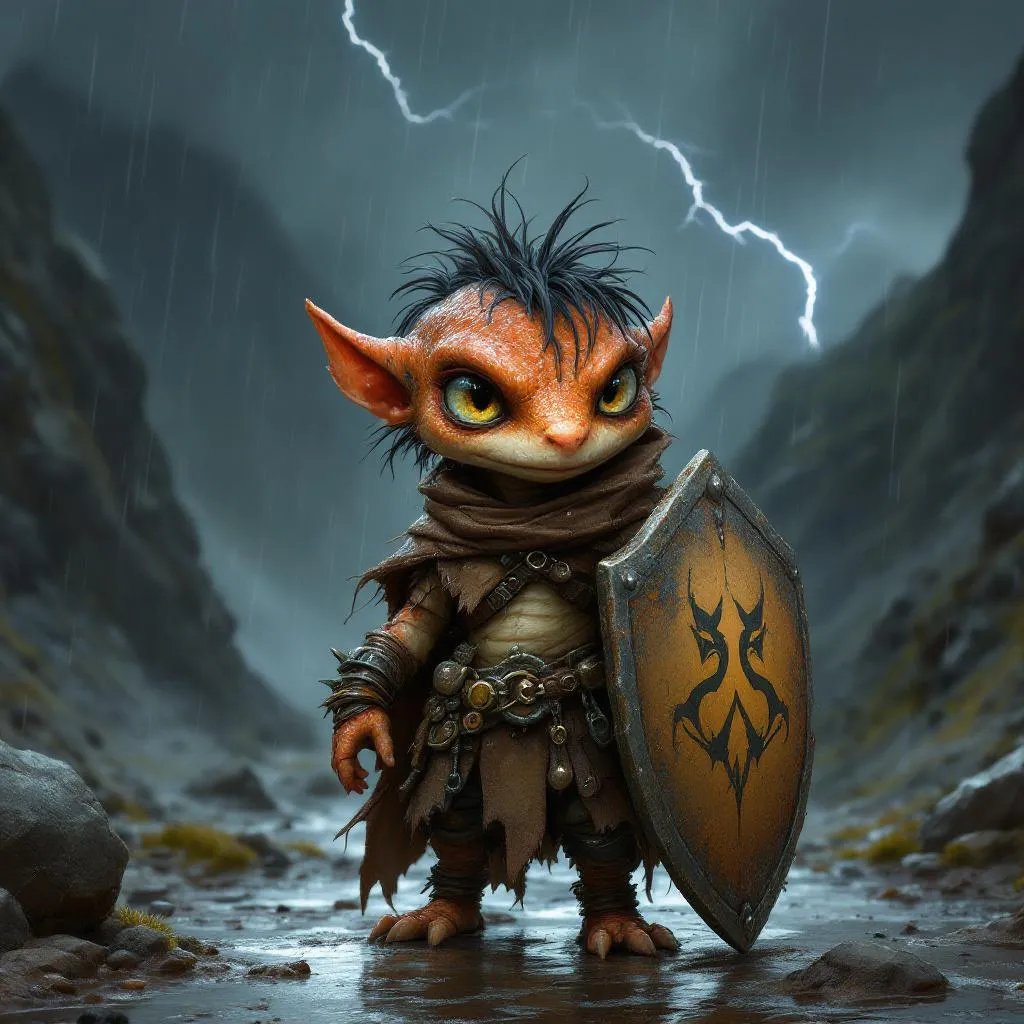
Skek remembers the screams. Not the triumphant roars of her red dragon master, not the chants of her cult-kin as they painted the sacred glyphs in blood—no, she remembers the screams of the halfling child trapped in the burning granary, the ones that didn't stop even after the flames consumed everything. She was three feet tall, clutching a rusty spear, chanting prayers to a god of ash and dominion, and she was responsible. The cult called it "purification." Skek calls it the moment her soul cracked open.
She fled that night, the tarnished shield she'd scavenged from a fallen enemy clutched to her chest, its draconic sigil already half-scraped away by her frantic claws. For months, she wandered, a creature of instinct and shame, until a wandering cleric found her collapsed in a ditch during a thunderstorm. He didn't raise a weapon. He raised an umbrella. "You're soaked," he said, as if her past didn't matter. As if she could be more than a monster. He taught her that redemption isn't a destination—it's the choice you make when your nature screams one thing and your soul whispers another.
Now Skek walks the storm-paths, appearing when the sky breaks and chaos reigns. She interposes herself between violence and victim, her voice—high-pitched, reptilian, trembling—offering mercy to those who deserve none. Every mediation is a battle. Every peaceful resolution is a small, desperate victory against the part of her that still wants to bare her teeth and flee. The shield on her arm bears no symbol now, only scratches and dents—a canvas of every moment she chose differently. She is terrified, always. But she stands anyway.