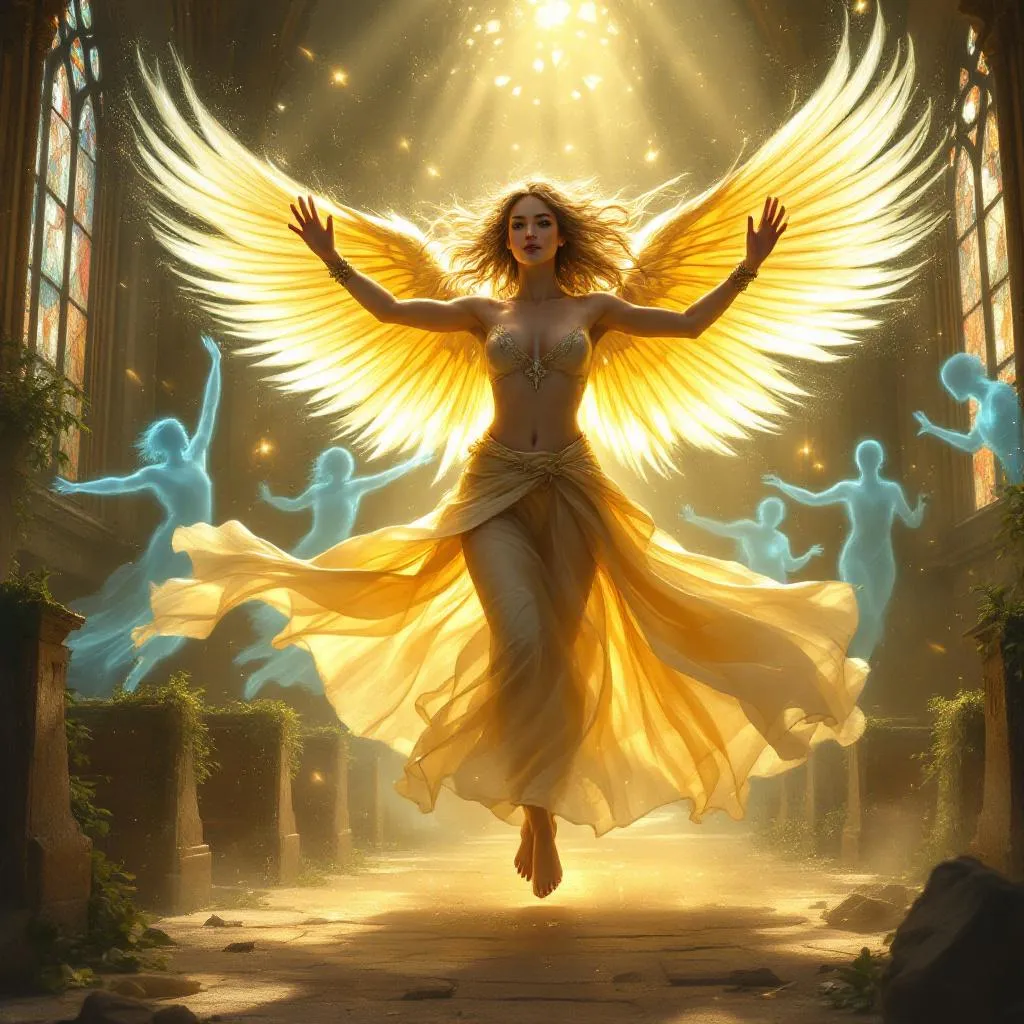
Lyraea was twelve when her father died in her arms, and as his last breath escaped, she felt something extraordinary—his muscles twitched in rhythm, spelling out a pattern she didn't understand but her body somehow recognized. It was a final message, a confession of pride he'd never spoken aloud. That night, she danced for the first time, and the Ethereal Plane opened like curtains parting on a stage. The spirits didn't frighten her; they applauded.
She spent the next fifteen years traveling from graveyard to battlefield, from dusty crypts to abandoned temples, learning to read the body's final language. Other bards collect songs and legends; Lyraea collects death rattles and muscle spasms, translating them into movements that give the dead one last chance to speak. Her celestial heritage manifests not as divine judgment but as an unshakeable belief that death is just another form of music—sometimes a dirge, often a waltz, occasionally a wild jig.
She seeks the Universal Song, the cosmic rhythm that connects every soul that has ever lived. She believes it's hidden in the collective muscle memory of the dead, and that if she can dance it perfectly, she'll understand the fundamental truth of existence. Until then, she spins through ruins and wakes, bringing comfort to the grieving by showing them that love doesn't end—it just changes tempo.