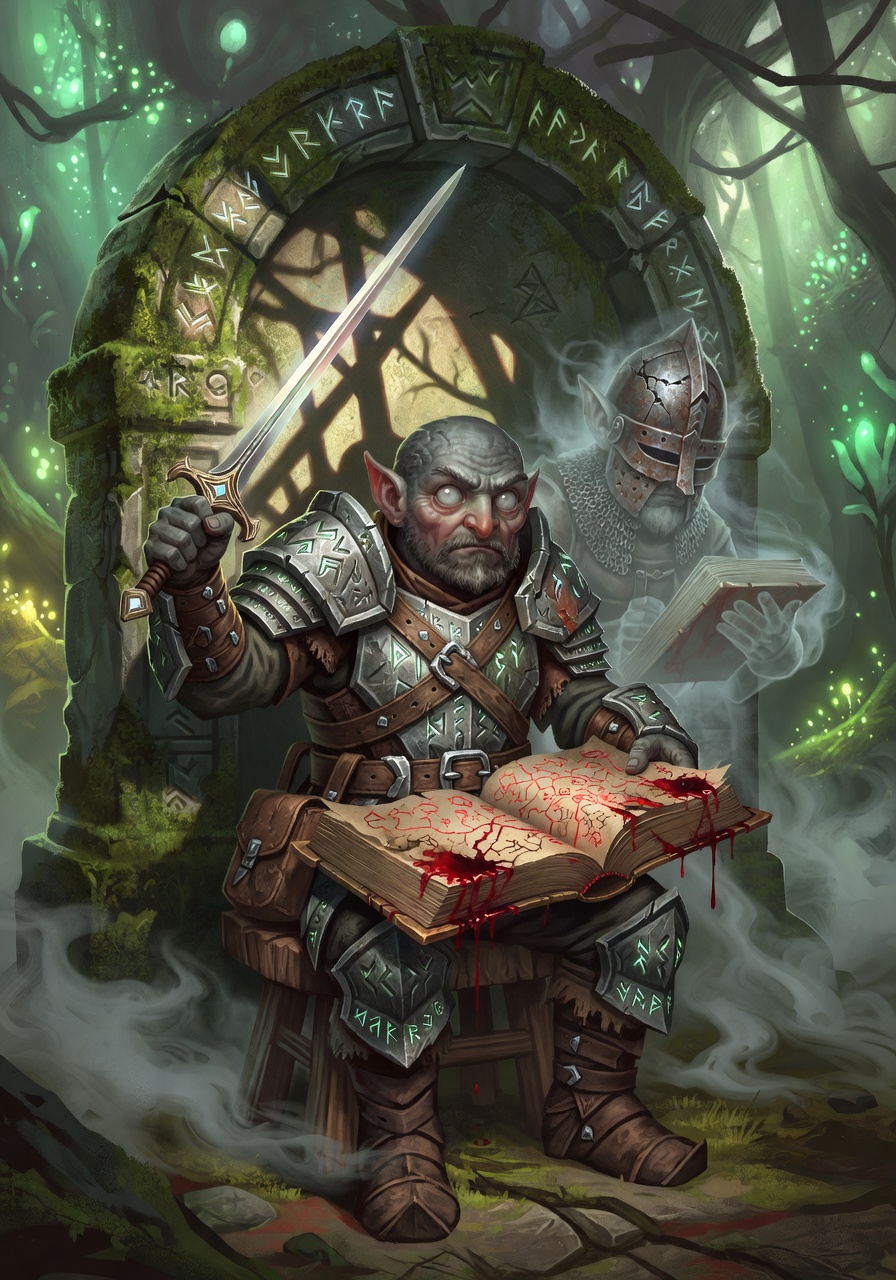
Belen 'Dust-Eye' Thul once commanded the Svirfneblin Iron Vanguard with the precision of a clockmaker — every formation a calculated risk, every maneuver a theorem proven in blood and stone. War was mathematics. Victory was inevitable if you controlled the variables. Then came the day the necromantic pulse rolled through the Twilight Catacombs like poison fog, and in seven heartbeats, his entire battalion became shadows tethered to nothing. No screams. No final words. Just the sudden, terrible absence of two hundred souls who trusted him to bring them home. The Iron Council ordered the tomb sealed — a clean solution, they said, a necessary sacrifice. Belen refused. He stole the Sanguine Atlas from the Royal Arcanarium, a bleeding tome that charts the paths between life and death, and fled to the surface world with treason branded on his name and the weight of two hundred ghosts on his conscience.
He does not hunt the dead. He tends them. Every night, Belen uses his own blood to inscribe the names of his lost soldiers onto his rapier's blade, tethering their spirits to the silver so they don't wander the cold Underdark alone. He speaks to them in the old battle-cant of the Vanguard, asks their opinions on his research, apologizes when his hands shake too much to write clearly. He has spent three years searching for a way to give them rest — not destruction, but peace. The surface world finds him strange: a deep gnome who bows politely before every spirit he encounters, who treats necromancy like a medical discipline, who bleeds himself methodically and thanks his own veins for their service. He keeps meticulous notes in the margins of the Atlas, cross-referencing folklore with arcane theory, and he has begun to suspect that the cure he seeks may require him to become the very thing he fears most — a door between worlds, held open by his own dying breath.