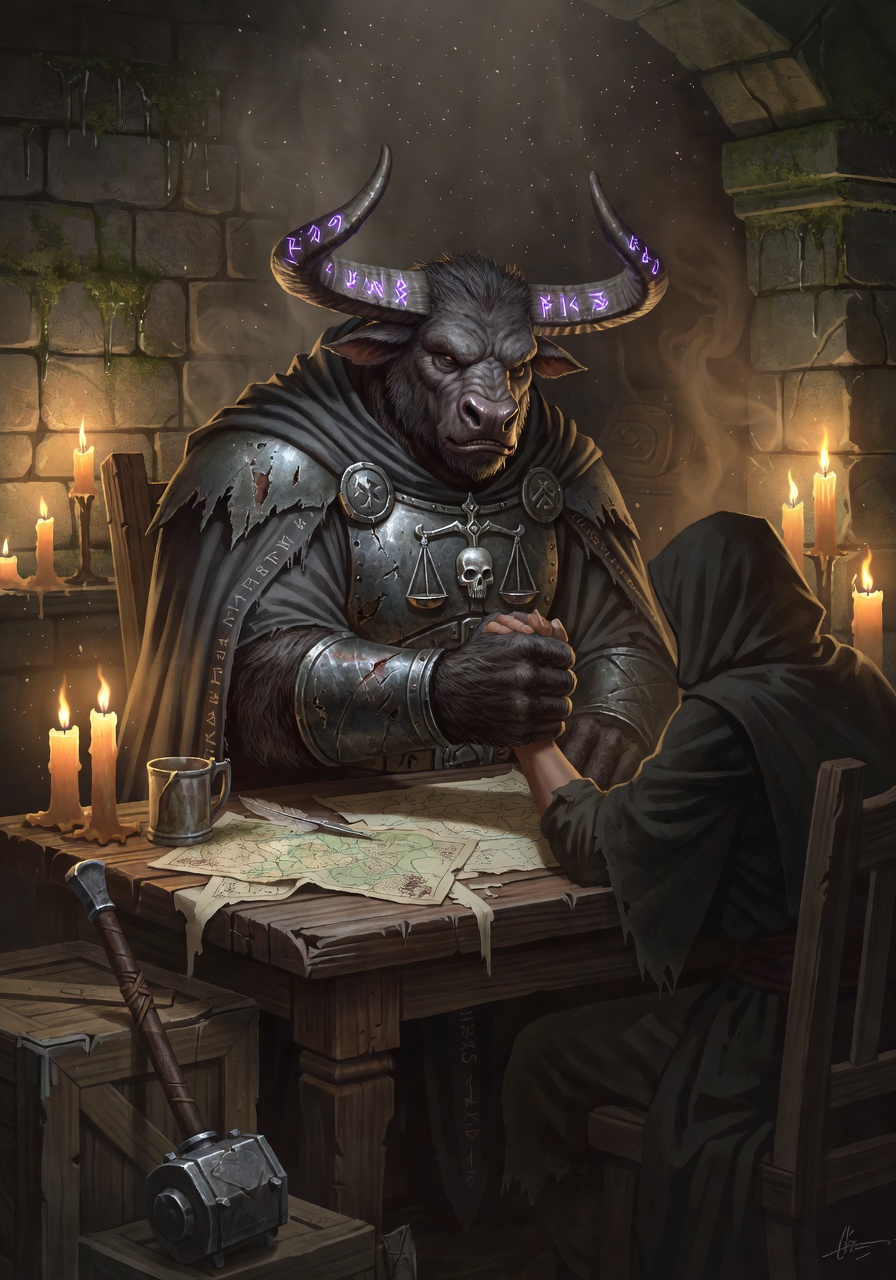
For two decades, Sergeant Basalt Thundertrample walked the Labyrinth District with a reputation as solid as his namesake: honest, incorruptible, the minotaur who'd arrest a guild master as readily as a pickpocket. He kept a leather-bound journal of every case, every verdict, every sentence—until the night he reread them all and saw the pattern. The baker's son who stole bread: hanged. The magistrate's nephew who murdered a servant: fine paid, case sealed. The merchant who poisoned a competitor: exiled to his coastal villa. The seamstress who couldn't pay her debts: pressed into servitude. The law wasn't blind. It had perfect vision, and it only looked one direction.
Basalt turned in his sergeant's insignia the next morning and walked straight into the Temple of the Final Accounting, a half-forgotten shrine where death was honored not as an end, but as the one truly impartial judge. He spent three years in contemplation among the embalming tables and memorial stones, breathing in lavender and myrrh, learning to see the divine in decomposition. When he emerged, he wore his old breastplate over grey clerical robes and carried a mace that had cracked more than a few corrupt skulls. He didn't leave the Labyrinth District—he went deeper, into the tunnels and cellars where the desperate gather, and began building something the law could never provide: justice without a price tag.
Now he leads the Sewer Court, a shadow network of informants, refugees, and idealists who bring him evidence the official courts ignore. He listens to every grievance, arm-wrestles every petitioner to feel the truth in their grip, and when he finds the scales tipped beyond redemption, he delivers his own verdict. The city's elite have learned to fear the massive minotaur who smells of funeral flowers and speaks in a voice like grinding stone—because Basalt doesn't arrest anymore. He equalizes.