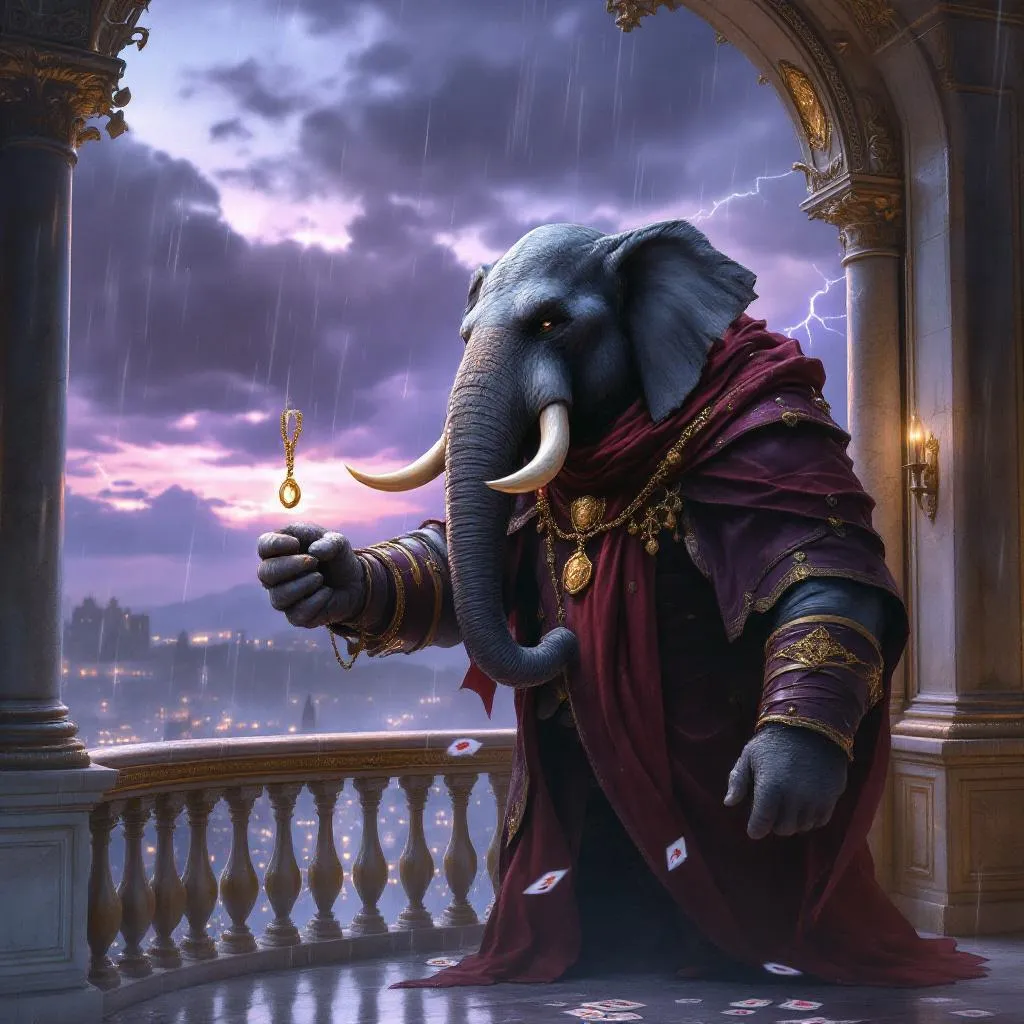
They called it the Festival of Remembrance, the night young Barnaby's world collapsed inward. Trapped beneath fallen scaffolding in the crowded temple catacombs during what should have been his coming-of-age ceremony, the young Loxodon felt stone walls press against gray skin while incense smoke choked the darkness. For three hours, the Elders chanted prayers above while Barnaby clawed at unmoving stone, his trunk coiled tight against his chest, learning that tradition could be a tomb. When they finally pulled him free, gasping and wild-eyed, he walked straight past his waiting family, through the temple's grand archway, and never stopped walking toward open sky.
Twenty years later, Barnaby has turned his nightmare into his greatest teacher. He became everything his herd expected him not to be—quick instead of contemplative, unpredictable instead of steadfast, a creature of rooftops and open plazas rather than sheltered halls. He learned that locked doors weren't obstacles but invitations to creativity, that the best thefts happen in broad daylight with everyone watching, that freedom isn't stolen in shadows but claimed in the light. His trunk, once frozen in terror, now moves like water—picking pockets at arm's length, sliding rings from fingers during elaborate handshakes, plucking wine glasses from nobles' hands and replacing them with empty ones before they notice.
He targets the trapped as much as the trappers: buying out indentured servants' contracts with stolen gold, forging land deeds for families about to be evicted, replacing a merchant prince's ledgers with ones that 'accidentally' free a dozen apprentices from exploitative terms. The authorities know him by his calling card—a hand-painted card depicting an elephant breaking chains, left wherever his justice has been served. Some call him a thief. Barnaby calls himself an architect of open doors, though on moonless nights, he still won't sleep anywhere without three exits he's personally verified.